
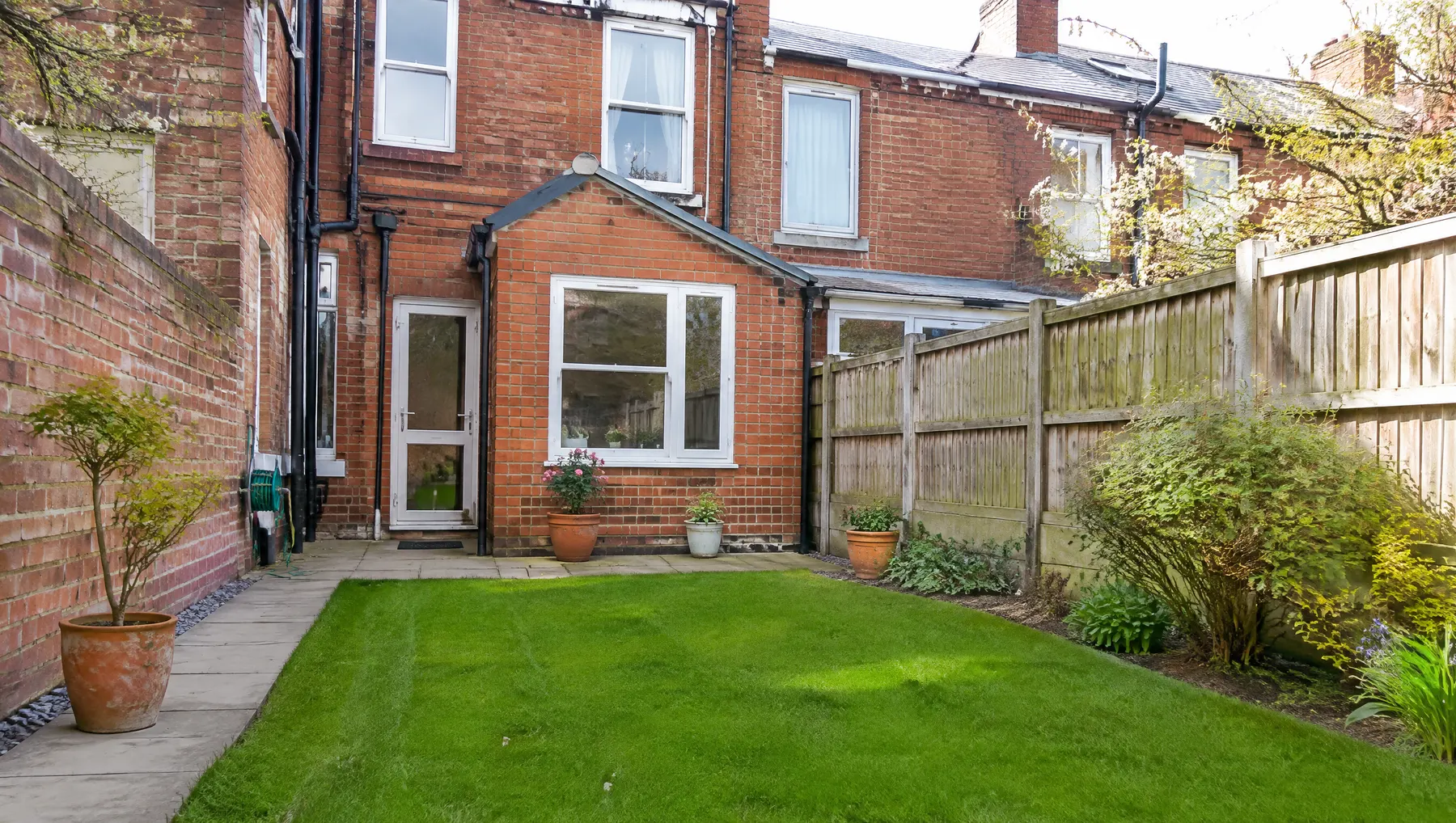
Real turf is the better choice if you want a living lawn that is good for wildlife, stays cool underfoot and costs less to lay, and you are happy to mow it through the growing season. Artificial grass suits you if you want a lawn that looks green all year with no mowing, especially in a small, shaded or heavily used garden where real grass struggles.
Neither is perfect. Real turf needs mowing and feeding. Artificial grass has an environmental cost and a limited lifespan. The right answer depends on your garden and how you live in it.
The quick comparison
| Real turf | Artificial grass | |
|---|---|---|
| Upkeep | Mowing in the growing season, feeding, occasional scarifying | Brushing, removing leaves, rinsing pet areas |
| Lifespan | Indefinite with care | Roughly 10 to 15 years, according to Which? |
| Looks | Natural, changes with the seasons, can brown in drought | Green all year, consistent |
| Wildlife | Supports insects, worms and feeding birds | Poor for wildlife, Which? says |
| Heat | Stays cool underfoot | Can get hot in strong sun |
| Drainage | Soil absorbs rain, clay can puddle | Needs a free-draining sub-base |
| Shade | Struggles in deep shade | Copes with shade |
| Ready to use | A few weeks after laying (RHS) | Straight away |
| End of life | None, it keeps growing | Most goes to landfill or incineration (Which?) |
Upkeep: the main reason people switch
A real lawn needs regular mowing from spring to autumn, plus feeding, weeding and the odd scarify if you want it looking its best. For busy households, older homeowners or anyone who simply hates mowing, that is the big draw of artificial grass.
Artificial grass is not zero maintenance, though. Leaves, moss and debris need brushing or blowing off, the pile needs a stiff brush now and then to keep it upright, and pet areas need rinsing. Which? also points out that fake lawns require regular upkeep, which surprises some owners.
Lifespan and the environment
This is the real downside of artificial grass. Which? says fake lawns are often made using virgin plastic and have a shelf life of roughly 10 to 15 years. At the end of their life some can be recycled, but in most cases artificial grass is incinerated or goes to landfill. Loose fibres can also add to microplastic pollution.
Real grass keeps going for as long as you look after it. The RHS notes that even a brown lawn in a drought usually has living roots below, ready to send up fresh leaves once rain returns, and advises against watering established lawns through summer. So a real lawn does not have to cost you water every year.
How each one looks through the year
Real grass changes with the seasons. It greens up fast in spring, can fade to straw in a dry July and comes back with the autumn rain. Some people love that, others find a brown lawn in August hard to live with.
Artificial grass looks the same in January as it does in June. Better products mix two or three shades of green with a brown thatch layer, so they look less like a carpet. Up close and in low winter light, most people can still tell the difference, so it is worth seeing a sample in your own garden before deciding.
Wildlife
A real lawn feeds birds, worms and insects, especially if you let parts of it grow a little longer. Which? describes plastic lawns as terrible for local wildlife, and says they cannot absorb carbon dioxide the way living grass does.
If wildlife matters to you but you want less mowing, there is a middle way: real turf in the main lawn with a longer, wilder strip at the edge, or artificial grass only in the small, shaded patch where real grass keeps failing.
Drainage on West Midlands clay
Much of the West Midlands sits on heavy clay. Real turf on clay can puddle and compact in winter, which is why good ground preparation matters so much. The RHS recommends digging or rotovating to 20 to 25 cm before turfing so the soil is not compacted.
Artificial grass on clay needs a free-draining sub-base of crushed stone and sharp sand, or rain sits underneath and smells. Laying it straight on soil or old turf is one of the most common reasons artificial lawns fail, so ask any installer exactly what goes underneath.
Kids, dogs and heat
For families with young children, artificial grass means no muddy knees in winter and no patchy goalmouth by July. For dog owners, it ends the yellow urine patches, though it needs rinsing to stop smells building up, and solid waste still needs picking up.
The trade-off is heat. Artificial grass can get noticeably hot in strong summer sun, which matters for bare feet and paws. Real grass stays cool, even on the hottest days.
Shade and awkward spaces
Real grass needs light. Under mature trees, beside tall fences or in narrow Victorian terrace gardens, it often thins out and turns to moss whatever you do. Artificial grass is often the better answer in these spots, and on balconies or small courtyards where real turf is not practical.
So which should you choose?
- Larger, sunny garden, wildlife matters: real turf.
- Small, shady garden where grass keeps dying: artificial grass.
- Dogs that wreck the lawn: artificial grass, with a good drainage layer.
- Budget is tight: real turf usually costs less to lay.
- Hate mowing but want some nature: real turf with a mown path and longer edges, or a mix of both.
How we can help
We lay both, and we will tell you honestly which suits your garden on the free site visit. Our turfing page explains how we prepare the ground and lay a new lawn, and our artificial grass installation page covers the sub-base and edging. If it is just the upkeep you are dreading, our garden maintenance service can keep a real lawn in shape.
Going for real turf? Read our guide on the best time to lay turf first, then ask for your free quote.
Frequently asked questions
How long does artificial grass last?
Which? puts the lifespan at roughly 10 to 15 years. How long yours lasts depends on the product, the quality of the sub-base, how much wear it gets and how well it is kept brushed and clear of debris.
Is artificial grass bad for the environment?
It has real downsides. It is usually made from plastic, does not support wildlife the way living grass does, can shed microplastic fibres and is mostly landfilled or incinerated at the end of its life, according to Which?. It does save on mowing and watering.
Can artificial grass be laid on clay soil?
Yes, but only on a proper free-draining sub-base. On clay, water sits on the surface, so the ground is dug out and replaced with compacted stone and sharp sand. Laid straight onto clay, it will puddle and smell.
How soon can I use a new turf lawn?
The RHS says you can use a lawn a few weeks after laying, and the first mow, on a high setting, is usually about three weeks in once the turf has rooted. Keep foot traffic off it as much as possible until then.
Is artificial grass good for dogs?
It solves muddy paws and yellow patches, but it needs rinsing to stop urine smells and waste must still be picked up. It can also get hot in strong sun, so give dogs a shaded area in summer.