
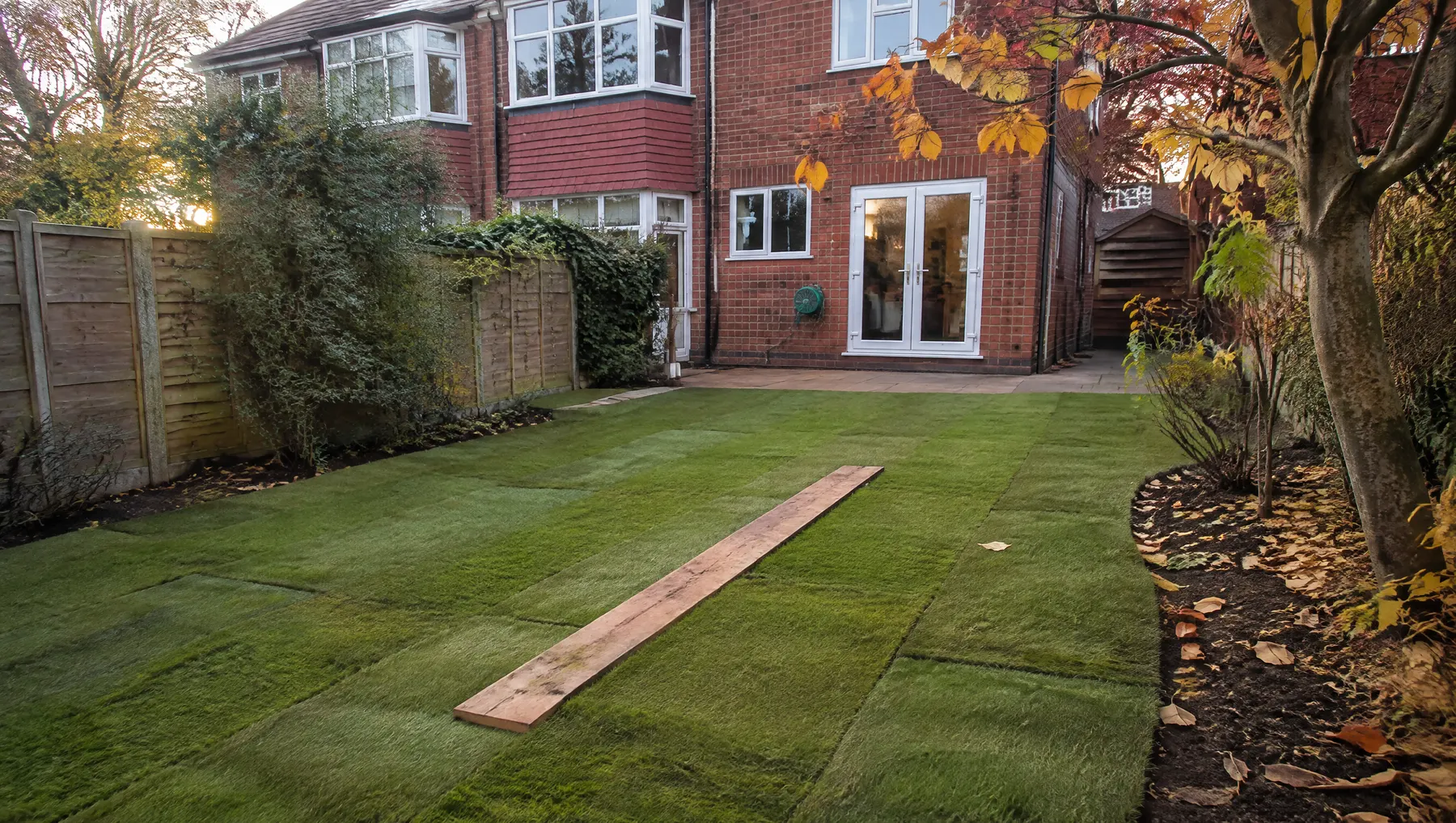
The best time to lay turf is mid-autumn, and it can be laid any time from mid-autumn to early spring as long as the soil is not waterlogged or frozen. That is the Royal Horticultural Society's advice, and it matches what we see on lawns across Coventry and the West Midlands: autumn turf roots fast and needs far less watering than turf laid in summer.
Summer is the season to avoid. Turf laid in hot, dry weather struggles to root and needs watering every day just to survive. Below is a month-by-month guide, plus what changes on heavy clay.
Why autumn is best
In autumn the soil is still warm from summer, so roots grow quickly, and rainfall is usually steady, so the turf does not dry out. Cooler air means the grass blades lose less water. Put those together and new turf can knit into the soil within a few weeks with little help from a hose.
The RHS lawn guide says turf is best laid in mid-autumn, but can be laid any time between mid-autumn and early spring. Its drought care advice gives the same window from a different angle: lay turf from September and through winter until March.
Month by month
| Months | How good for turfing | What to watch |
|---|---|---|
| September to November | Best | Soil still warm, steady rain, fast rooting |
| December to February | Good in mild spells | Do not lay on frozen or waterlogged ground; keep off frosty turf |
| March | Good | Ground can be wet on clay; growth starts as soil warms |
| April to May | Possible with watering | Dry spells arrive; water deeply and often |
| June to August | Avoid | Heat and drought make rooting hard; daily watering needed |
Winter turfing
Laying turf in winter surprises people, but it works. The RHS November advice is to lay a new lawn from turf during mild spells, if the soil is not waterlogged and the weather is not very wet, snowy or frosty. The grass will not grow much until spring, but the roots keep developing whenever the soil is above freezing, and you will rarely need to water.
Spring turfing
Early spring is fine. Later in spring, the risk is a dry April or May. Turf laid then needs proper watering through any dry spell and into early summer, until it is well rooted.
Summer turfing
The RHS advises against laying turf in summer because heat makes it hard for the turf to root and it needs repeated watering. If you do lay in summer, expect to water every day in hot weather, ideally early morning or evening, and accept the risk that the edges may shrink and brown.
What changes on West Midlands clay
Much of the West Midlands sits on heavy clay. It holds nutrients well, which grass likes, but it gets sticky and waterlogged in winter and bakes hard in summer. That shortens the practical turfing window.
On clay we aim for early to mid-autumn, before the ground gets saturated, or a dry spell in early spring. Working wet clay squashes the air out of it and leaves a compacted, poorly draining base that the new lawn will struggle on for years. If you can squeeze a handful of your soil into a shiny sausage, it is too wet to work.
The RHS recommends digging or rotovating to 20 to 25 cm so there is no compaction, then letting the ground settle, ideally for five to six weeks, before laying. On clay, working in some sharp sand or organic matter during preparation helps the top layer drain.
Timing on the day: laying within 24 hours
Turf is a living product. The RHS says it should be laid within a day of delivery if possible. If it must wait more than a few days, unroll it and lay it flat in the light, watering it if dry, so it does not yellow and weaken.
So order turf for the day it will be laid, and have the ground fully prepared before it arrives.
Looking after new turf
- Water thoroughly straight after laying, unless heavy rain is forecast. The RHS warns that only wetting the top of new turf leads to shallow rooting.
- Keep off it as much as possible. Use planks if you must walk on it in the first couple of weeks.
- Check it is rooting by gently lifting a corner. When it resists, the roots have taken.
- Mow with the blades set high once it has rooted, usually about three weeks after laying in the growing season.
- Keep watering through dry spells in the first spring and summer, even if you laid it in autumn.
The RHS says you can usually use the lawn a few weeks after laying. Children and dogs are the main risk to a new lawn, so fence off part of it if you need to.
If you cannot wait for autumn
Sometimes the timing is not yours to choose. You have just moved into a new-build with a bare plot, or a party is booked for August. Turf can still work outside the ideal window, it just needs more effort from you.
In spring and summer, plan for deep watering every day in dry weather for the first few weeks, then every few days until it is well rooted. Lay it as early in the day as possible, water each strip as you go and keep off it completely in a heatwave. If you cannot commit to the watering, it is usually better to prepare the ground now and lay the turf in September.
Ready to plan a new lawn?
Our turfing service covers everything from stripping the old lawn and clearing the ground to levelling, soil preparation and laying. If the garden needs clearing first, we can handle garden clearance on the same job and take the waste away responsibly.
Still deciding between real and fake? Our guide to artificial grass versus real turf sets out the pros and cons of each. When you know what you want, book a free site visit and we will give you a fixed quote.
Frequently asked questions
Can you lay turf in winter?
Yes, during mild spells when the soil is not frozen or waterlogged. The RHS advises laying turf from autumn through to early spring. Winter turf grows little until spring but roots steadily and rarely needs watering.
Is it too late to lay turf in November?
No. The RHS lists November as a month to lay turf in mild spells, as long as the ground is not waterlogged and the weather is not very wet, snowy or frosty. On heavy clay, a dry spell is especially important.
Can you lay turf in summer?
You can, but the RHS advises against it. Heat and dry weather make rooting difficult, so summer turf needs deep watering every day in hot spells. Autumn is far more reliable and cheaper to look after.
How long before I can walk on new turf?
Keep off it for the first couple of weeks if you can. The RHS says the lawn can be used a few weeks after laying, once it has rooted. Gently lift a corner to check; if it resists, the roots have taken hold.
Is turf or seed better in autumn?
Both do well in autumn. Turf gives you a usable lawn in weeks and copes with a later start into winter. Seed is cheaper but takes longer to establish and needs sowing earlier in autumn while the soil is still warm.